Key Takeaways:
- Volume Is the Deciding Factor: The most reliable way to choose between a manual and an automatic capsule-filling machine is to start with your actual weekly output needs, not your budget or brand preference.
- The Semi-Automatic Tier Is Worth Considering: Skipping straight from manual to fully automatic is a common and costly mistake; the semi-automatic capsule filling machine fills a legitimate gap for growing operations.
- Maintenance Capacity Is Part of the Cost: A machine’s purchase price is only part of the total cost; the time, training, and upkeep required to keep an automatic system running reliably must be factored into any honest comparison of capsule-filling machines.
Most people buying a capsule filling machine for the first time focus almost entirely on price. They pick the cheapest option, get it home, and then realize it cannot keep up with their volume, or they spend far more than necessary on a machine built for a production floor when a simple manual plate would have done the job perfectly. The choice between a manual vs. automatic capsule filling machine is not really about which one is better. It is about which one fits your current situation and which one makes sense as your needs grow.
CapsuleFillingMachine.com is a manufacturer-independent resource built on hands-on experience with capsule equipment suppliers, contract manufacturers, and supplement formulators. It is not affiliated with any single brand, which means every comparison and recommendation here is based on real-world performance, not a sales agenda. The site covers everything from beginner buying guides and machine comparisons to DEA compliance resources, with a commitment to honest assessments that include limitations, pain points, and the things marketing materials tend to leave out.
In this article, we’ll examine manual vs. automatic capsule filling machines, what separates them in practice, where the semi-automatic option fits in, and how to match the right machine to your volume, budget, and long-term goals.
What Each Machine Type Actually Does
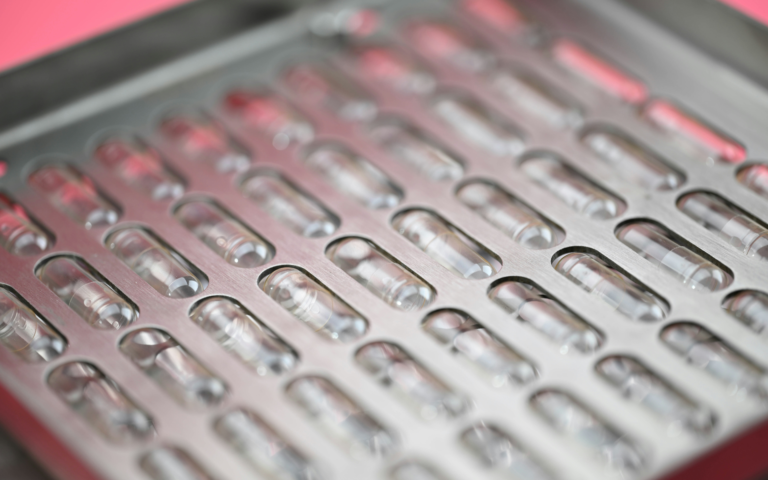
A manual capsule filler is a set of plates, usually holding between 100 and 400 capsules at a time, that you load, fill, tamp, and close entirely by hand. Every step requires your direct involvement, which gives you full control but also means your output is only as fast and consistent as your technique. The learning curve is short, but the repetition adds up quickly at higher volumes.
An automatic capsule filling machine handles the entire process mechanically: separating capsule halves, filling them, and closing them with minimal operator input. The throughput is significantly higher, but so is the complexity. These machines require proper setup, routine calibration, and more involved maintenance. A mechanical issue mid-run can stall an entire batch.
Understanding what each type actually does makes the comparison far more useful than simply looking at price or speed alone.
Matching The Machine To Your Volume And Budget
Choosing the right capsule filling machine comes down to three practical factors: how many capsules you actually need to produce, how much you are willing to spend upfront, and how much time you can realistically put into setup and maintenance. Getting this match wrong in either direction costs you money. Here is how each factor breaks down:
Batch Size And Weekly Output
If you are filling fewer than 300 capsules per week, a manual filler is almost always the right call. Beyond that threshold, the time and physical effort involved in hand-tamping start to outweigh the cost savings of a manual machine. Volume is the single most honest indicator of which machine tier you actually need. Our Best Capsule Filling Machines for Home Use guide covers the top options at this end of the range in detail.
Upfront Cost vs. Long-Term Value
Manual plates are the most affordable entry point, while a semi-automatic or automatic capsule filling machine carries a significantly higher price tag. The mistake most buyers make is treating cost as the only variable. A machine that cannot keep up with your output creates a bottleneck that ends up costing more in lost time than the price difference ever justified. The Council for Responsible Nutrition, the leading trade association representing 175+ dietary supplement manufacturers and ingredient suppliers since 1973, notes that its member companies are expected to comply with a host of federal and state manufacturing regulations, including equipment-specific GMP requirements, that make the capacity and maintenance demands of your filling equipment directly relevant to your compliance standing, not just your production efficiency. Our Top-Rated Capsule Filling Machines of 2026 rankings cover machines across all price tiers with head-to-head performance notes.

Setup Time, Training, And Maintenance
Manual machines require almost no setup and very little training to use effectively. Automatic systems are a different story: they need calibration, operator familiarity, and a consistent maintenance schedule to perform reliably. If you do not have the time or personnel to properly maintain a more complex machine, its throughput advantage disappears quickly. The FDA’s dietary supplement program, which enforces current Good Manufacturing Practice regulations under 21 CFR Part 111, requires that supplement manufacturers maintain calibrated, validated equipment and keep batch production records documenting how products were made, making the decision between machine types not just an operational question but a regulatory one as well.
Where A Semi-Automatic Capsule Filling Machine Fits In
A semi-automatic capsule-filling machine occupies a specific, often overlooked position in the capsule-filling landscape. It is not a compromise between manual and automatic; it is a genuinely different tool that suits a particular stage of growth. For anyone producing at a volume where manual is too slow but a fully automatic system is overkill, here is what the semi-automatic option actually offers:
Higher Output Without The Full Automation Price Tag
Semi-automatic systems can process significantly more capsules per hour than manual plate systems while costing far less than a fully automatic capsule-filling machine. This makes them a practical fit for small supplement brands that have outgrown hand-filling but cannot yet justify the capital investment of a production-floor machine. The throughput gain is real, and the price gap is substantial. Our Capsule Filling Machine Speed and Throughput Guide breaks down output rates across machine types with real numbers.
Operator Involvement Still Required
Unlike fully automatic systems, semi-automatic machines still require an operator to manage key steps in the process. This is not a flaw; it is actually an advantage for smaller operations where a human quality check at each stage is preferred. It also means less complexity in the mechanical system, which translates to simpler troubleshooting when something goes wrong.
The Right Bridge For Scaling Operations
If your current volume is straining your manual setup but you are not ready to commit to full automation, a semi-automatic machine gives you room to grow without overextending your budget. Our Best Capsule Filling Machines for Small Business guide covers the best options at this stage. The mistake to avoid is skipping this tier entirely and jumping to a fully automatic system before your volume and revenue can support the maintenance demands it requires. The Natural Products Association, the nation’s largest and oldest trade organization for the dietary supplement industry since 1936, representing over 10,000 manufacturer, retailer, and distributor locations, provides GMP education and certification for supplement manufacturers at every scale, reinforcing that the right equipment and the right infrastructure investment need to be matched to where a business actually is, not where it hopes to be.

Final Thoughts
The manual vs. automatic capsule filling machine decision is straightforward once you strip away the noise. Match the machine to your actual output needs, be realistic about your budget and maintenance capacity, and do not skip the semi-automatic tier if your volume sits somewhere in the middle. Every machine type has a legitimate place, and the right answer is simply the one that fits where you are right now, not where you hope to be in three years.
CapsuleFillingMachine.com exists precisely for this kind of decision: practical comparisons, honest assessments, and resources that cover everything from capsule sizing and powder flow to DEA compliance requirements. The Capsule Filling Machine Buying Guide is the next best step if you want a comprehensive framework before purchasing. The more clearly you understand your own operation, the easier it becomes to make the right choice.
Frequently Asked Questions About Manual vs. Automatic Capsule Filling Machine
Can a manual capsule filler handle vegetarian capsules the same way it handles gelatin capsules?
Yes, most manual fillers work with both types. Capsule shells can vary slightly in dimension across brands, so test a small batch first to confirm compatibility before committing to a large run.
How much space does a capsule filling machine typically require?
Manual plate systems fit on a standard countertop. Semi-automatic machines require more dedicated workspace, and fully automatic systems may require significant floor space and a dedicated power supply. Always check physical dimensions before purchasing.
Do capsule filling machines work with pellets, granules, or only powder?
Most are designed for free-flowing powders. Some models can handle small pellets or granules, but performance varies. Check machine specifications carefully and run a test fill before committing to a full batch.
Is there a difference in fill weight consistency between machine types?
Generally, yes. Automatic machines offer tighter consistency through mechanical control. Manual filling depends heavily on operator technique. Semi-automatic systems offer more consistency than hand-filling but still require attentive operation.
Are capsule-filling machines regulated for home or personal use in the United States?
Home use for personal, non-commercial purposes is generally treated differently than commercial sales. Requirements can change, so verify current rules with official sources or a qualified compliance professional before assuming any exemption applies.
What is the typical lifespan of a manual capsule filling machine?
It depends on build quality and maintenance habits. Entry-level plastic systems wear faster under regular use. Machines built with stainless steel or higher-grade materials hold up significantly longer.
Can the same machine be used for different capsule sizes?
Most machines are size-specific. Switching sizes usually requires a different plate or a separate machine. Some manufacturers offer interchangeable plate sets, but availability varies by model. Confirm size compatibility before purchasing.